
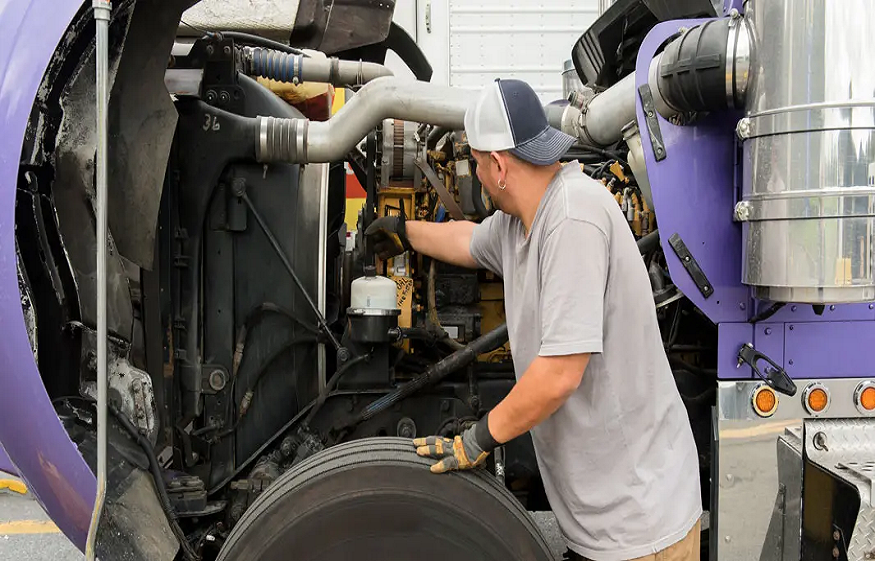
The Role of Preventive Maintenance in Road Safety
Any accidents involving heavy trucks can be terrifying experiences and can cause catastrophic damage and injuries. It has been well established that ensuring preventive maintenance can play a big role in minimizing the chances of accidents and increasing road safety.
Explore the different reasons why preventive maintenance plays such an important role in increasing road safety.
1. Preventing Tire Failures
Tire checking is an integral part of the heavy truck preventive maintenance routine. Tire condition has a big impact on road safety. If the tires are worn out, they can blow out, causing you to lose control. Regular maintenance means examining tires and ensuring they are in good condition, the tread depth is ‘healthy’, there is no cut, sidewall scuff, irregular wear, and the tire pressures are proper.
2. Shortening the Stopping Distance
Preventive maintenance also involves checking and fixing any braking system issues. A well-maintained braking system ensures your truck comes to a halt within the required stopping distance when the brakes are applied.
The maintenance schedule can involve the following:
- Inspecting and lubricating the drum brake system and checking the slack adjusters for correct functioning.
- Inspecting air disc brakes and ensuring they are properly working and free from any air leaks
3. Keeping the Driver Informed at All Times
Planned maintenance provides you with a better understanding of your truck’s condition and unique needs. For example, if your truck is making strange sounds, regular maintenance can help you understand the underlying problem and how urgently a repair or parts replacement is required.
The regular interaction between the driver and technicians helps increase driver confidence when they are on the road. In other words, you, as a driver, will already know how your vehicle is going to behave.
4. Increased Visibility Means Increased Safety
Lighting inspection and repair are an integral part of any preventive maintenance routine. If your vehicle has missing or inoperative lights, they can decrease visibility on the road. Damaged wires or other issues can be fixed during routine maintenance to ensure you stay safe on the road after dusk.
When visibility increases, your field of view increases. You can detect hazards earlier, make your truck more visible to others, and reduce accidents due to blind spots. Improved visibility also brings down reaction times. It also enables safer maneuvering in bad weather or low-light conditions.
5. Preventing Breakdowns
Preventive maintenance prevents truck breakdowns. Breakdowns can leave drivers stranded on the roadside. This can leave them vulnerable to potential accidents. By preventing breakdowns, you reduce that risk. It is not just tire and mechanical failures that can cause vehicle breakdowns. Poorly maintained emissions systems can also cause the vehicle to stop working, leaving drivers in dangerous situations on the roadside.
6. Ensuring Reliable On-Board Safety Systems
Regular maintenance further ensures that your trucks’ on-board safety system (OBSM) keeps working reliably. This system plays a crucial role in keeping drivers and those on the road safer. OBSMs rely on cameras, sensors, and radars for:
- Providing real-time collision mitigation
- Automating hazard responses
- Monitoring driver behavior
Its features can help avoid accidents and reduce the severity of injuries.
Conclusion
Thus, preventive maintenance protects not just the truck driver, but others on the road as well. The stakes from accidents are much higher than most people assume. Accidents can not only cause loss of limb and life, but also potential fines and litigation that can put tremendous financial strain on your business.
Any time an accident involving commercial vehicles occurs, the investigation essentially involves determining whether any form of negligence occurred due to poor maintenance. Scheduled maintenance, thus, helps not only reduce operating costs, but also meet regulatory requirements.